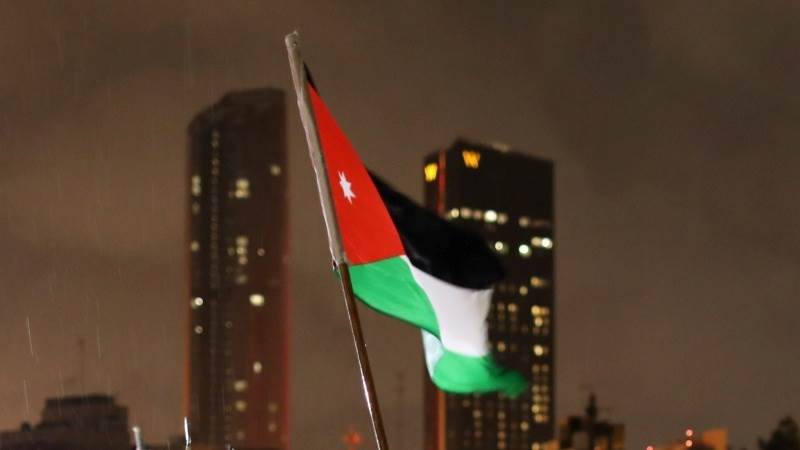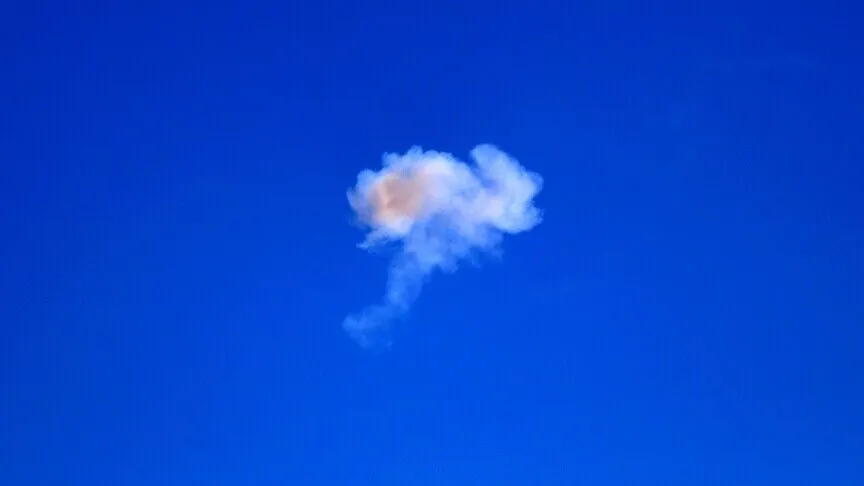
Jordan's army intercepted eight missiles that entered the country’s airspace, according to officials. The interceptions occurred as Iran’s Islamic Revolutionary Guard Corps (IRGC) claimed responsibility for striking the King Hussein and Azraq US airbases in Jordan. The IRGC stated it launched ballistic missiles at these facilities, alleging "heavy damage" from the attacks. These developments follow reports of missiles being fired from Larak Island, Iran, towards targets in the region. The Jordanian army confirmed that its forces successfully destroyed the eight missiles that breached the country's airspace, ensuring they were neutralized before they could pose any threat to civilians or property within the kingdom.
Iran Claims Jordan Strikes
The Jordanian army stated its forces destroyed the missiles before they could pose any threat to civilians or property within the kingdom. Meanwhile, the Islamic Revolutionary Guard Corps (IRGC) claimed responsibility for the attack, asserting the operation involved both missiles and drones. The IRGC specified its targets were infrastructure and areas where fighter jets were stationed at the King Hussein and Azraq US airbases in Jordan. According to the IRGC, these strikes resulted in "heavy damage" to the targeted facilities. The IRGC's claim of striking the King Hussein and Azraq US airbases with ballistic missiles noted a significant escalation in regional tensions. The group further elaborated that the attack was executed using a combination of missiles and drones, specifically targeting critical infrastructure and areas where fighter jets were stationed at the US airbases. This detailed claim by the IRGC showed the precision and intent behind their operation, which they asserted caused substantial damage.
US Strikes Iranian Launchers
Earlier Sunday, US forces conducted strikes against two Iranian launchers located on Larak Island. The Islamic Revolutionary Guard Corps (IRGC) subsequently claimed that several fighters and civilians were killed and injured in the US strike, vowing to respond to the action. These strikes on Larak Island marked the first time US forces had targeted Iranian territory since late July. According to reports, the Iranian launchers were allegedly being prepared to fire rockets containing sea mines into the Strait of Hormuz. The IRGC reiterated its commitment to retaliation following what it described as "heavy damage" from the US operation. The US forces' operation on Larak Island specifically targeted two Iranian launchers, a move that the IRGC vehemently condemned. The IRGC claimed that this US strike resulted in casualties, including both fighters and civilians, and publicly vowed a strong response to what it termed an act of aggression. This direct targeting of Iranian territory by US forces was particularly noteworthy, as it was the first such instance since late July, indicating a significant shift in the nature of engagement between the two powers.
Regional Tensions Escalate
The Islamic Revolutionary Guard Corps (IRGC) stated its strike was in retaliation for a US attack on Iran’s Larak Island, claiming it inflicted "heavy damage." Tensions between Tehran and Washington have remained high since the war began with strikes on Iran in late February. A framework deal was signed in June through Pakistani and Qatari mediation in an effort to de-escalate the situation. However, in July, the United States began a two-week bombing campaign and reimposed a naval blockade after differences emerged over navigation in the Strait of Hormuz. The IRGC explicitly framed its recent strike on US airbases in Jordan as a direct retaliatory action for the earlier US attack on Iran’s Larak Island, emphasizing the "heavy damage" it claimed to have inflicted. This cycle of strikes and counter-strikes reflects the persistent and elevated tensions that have characterized relations between Tehran and Washington since the initial strikes on Iran in late February. Despite diplomatic efforts, including a framework deal signed in June through Pakistani and Qatari mediation aimed at de-escalating the situation, hostilities have continued. Notably, in July, the United States initiated a two-week bombing campaign and subsequently reimposed a naval blockade, actions taken after significant differences arose concerning navigation rights and practices in the strategically vital Strait of Hormuz. These ongoing developments highlight the fragility of regional stability and the volatile nature of the standoff between the two nations.