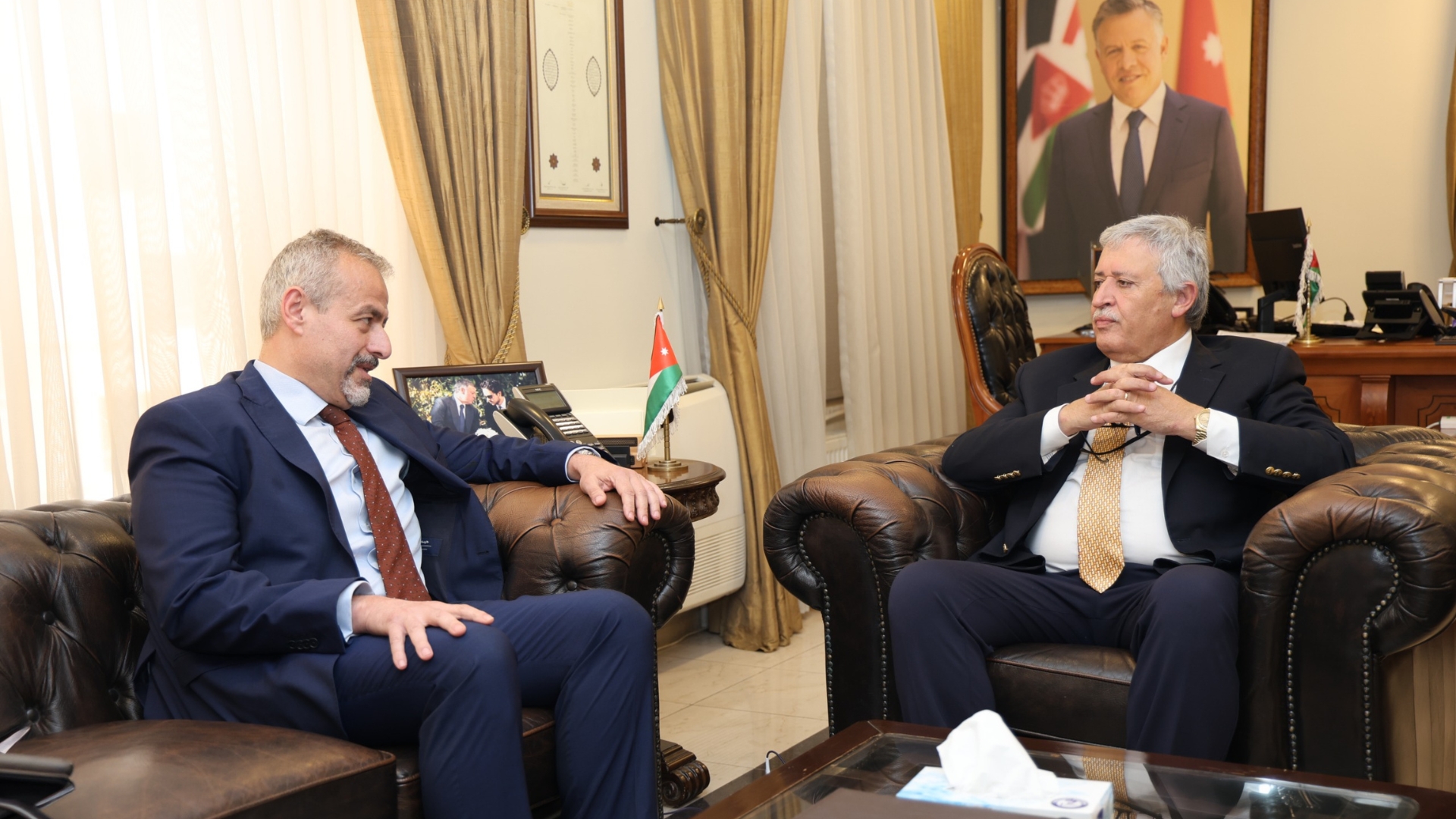
Jordanian Labor Minister Nidal Qatamin met with Egyptian Ambassador to Amman Khaled Al-Abyad on Thursday, September 3, to discuss cooperation and issues concerning Egyptian labor in Jordan. Mr. Qatamin affirmed that "the ties between Jordan and Egypt remain a key guarantee and solid foundation for protecting the interests of both countries and peoples under all circumstances." The minister also noted "the Labor Ministry’s commitment to keeping communication channels open to resolve any obstacles facing Egyptian workers within the applicable legal frameworks." He added that "the ministry’s commitment to regulating non-Jordanian labor," specifically mentioning "Egyptian workers, who he said are respected and valued by Jordanians." Mr. Qatamin further stated, "The Labor Law does not differentiate in labor rights between Jordanian and non-Jordanian workers." Ambassador Al-Abyad responded that "Egyptian workers are keen to abide by Jordan’s labor law and regulations."
Ministerial Commitment to Workers
Jordanian Labor Minister Nidal Qatamin emphasized the strong relationship between the two nations, stating that the ties between Jordan and Egypt serve as "a key guarantee and solid foundation for protecting the interests of both countries and peoples." Mr. Qatamin reiterated the Labor Ministry's dedication to addressing issues faced by Egyptian workers, showing "the Labor Ministry’s commitment to keeping communication channels open to resolve any obstacles facing Egyptian workers within the applicable legal frameworks." He further affirmed the ministry's commitment to regulating non-Jordanian labor, specifically noting Egyptian workers. Mr. Qatamin noted that Egyptian workers are respected and valued by Jordanians, reinforcing the collaborative spirit between the two countries in managing labor affairs.
Labor Law and Worker Rights
Jordanian Labor Minister Nidal Qatamin affirmed that the nation's legal framework ensures equitable treatment, stating, "The Labor Law does not differentiate in labor rights between Jordanian and non-Jordanian workers." This commitment to non-discriminatory labor rights is particularly relevant as the current period for non-Jordanian workers to adjust their legal status is set to conclude later this month. The minister's remarks show the government's approach to managing the workforce, emphasizing adherence to established legal frameworks for all individuals working within Jordan's borders. These discussions between Jordanian and Egyptian officials come as the deadline approaches for workers seeking to regularize their employment status.
Ambassador's Perspective
Egyptian Ambassador to Amman Khaled Al-Abyad praised the ongoing cooperation and coordination between Jordan and Egypt concerning Egyptian labor issues. Ambassador Al-Abyad noted the commitment of Egyptian workers to the host country's legal framework. "Egyptian workers are keen to abide by Jordan’s labor law and regulations," Al-Abyad stated, emphasizing a desire for compliance. This perspective from the Ambassador shows the bilateral efforts to manage labor relations effectively and maintain legal adherence among the workforce.
Broader Bilateral Ties
The discussions between Jordanian Labor Minister Nidal Qatamin and Egyptian Ambassador to Amman Khaled Al-Abyad extend beyond immediate labor concerns, reflecting a wider framework of cooperation. These engagements underline the ongoing diplomatic relationship between Jordan and Egypt, which frequently involves coordination on various shared interests. The presence of Ambassador Al-Abyad in Amman for these talks signifies the importance both nations place on maintaining open channels for dialogue. Such meetings contribute to strengthening the bilateral ties that support economic and social exchanges, including the status of Egyptian workers in Jordan. Continued engagement at this level aims to ensure stability and mutual understanding between the two countries.