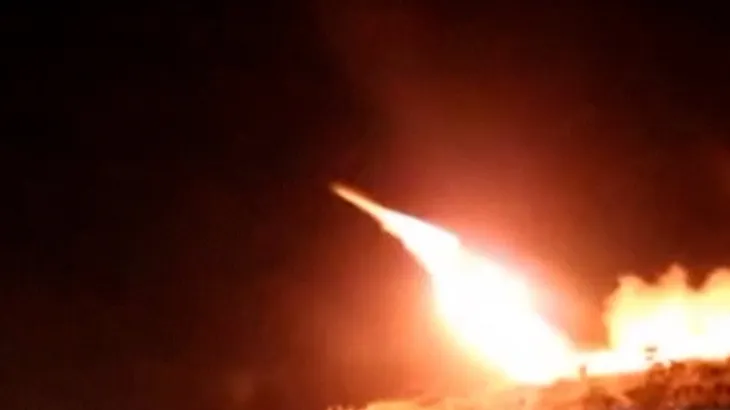
Iranian drone attacks targeting Gulf states and Jordan have failed to achieve their objectives, according to reports, marking a significant setback for the perpetrators. Jordan's air defences, demonstrating strong capabilities, successfully intercepted eight missiles during these incidents, preventing potential damage and casualties. The United States Central Command (USCENTCOM) has been diligently monitoring the evolving situation, which escalated dramatically on August 31, 2026, at 9:02 AM. The attacks represent a continued and concerning source of tension in the region, prompting urgent calls for diplomatic solutions and de-escalation from international bodies and regional powers alike. The repeated failures of these aggressive actions show the effectiveness of regional defence systems and the commitment of targeted nations to protect their sovereignty.
Details of Attacks and Denials
The UAE Ministry of Defence successfully intercepted an Iranian drone over its territorial waters, amidst a period of significantly heightened regional tensions. This interception noted the UAE's vigilance and readiness to protect its airspace and maritime boundaries. Separately, Iran also targeted two military bases located in Jordan, expanding the geographical scope of its aggressive actions. The UAE Ministry of Defence later explicitly denied reports from Iranian media claiming that Al Minhad Air Base near Dubai had been struck by missiles, firmly refuting what it described as disinformation intended to sow confusion and exaggerate the impact of the attacks.
The Ministry of Defence stated unequivocally that "the Armed Forces remain on a high state of readiness to address any potential threats." This official denial directly countered the Iranian media narratives suggesting a successful missile strike on the air base, emphasizing the integrity of the UAE's defence systems. The interception of the drone over UAE territorial waters marks a specific and verifiable incident in the broader context of recent regional actions, demonstrating the immediate and tangible threats faced. Iranian forces have been implicated in several incidents across the Gulf region, leading to a series of intercepts by various defense forces, including those of the UAE and Jordan. The targeting of military bases in Jordan further indicates the wide-ranging scope of these recent activities and the broader pattern of Iranian aggression. Authorities in the UAE emphasized their preparedness to manage evolving security situations in their airspace and maritime zones, reinforcing their unwavering commitment to national security and regional stability. These defensive actions show the persistent challenges posed by Iranian military activities in the Gulf.
Context and Retaliation Claims
The Islamic Revolutionary Guard Corps (IRGC) asserted that its recent attacks were a direct response to US strikes on Larak Island, situated strategically in the Strait of Hormuz. This claim positions the IRGC's actions as retaliatory, attempting to link them to specific prior military engagements involving US forces. The IRGC's statement sought to justify its aggressive posture by framing its operations as a necessary reaction to perceived provocations.
US Central Command (USCENTCOM) confirmed that its forces had undertaken "limited, precise action" targeting Iran's minelaying operations. This statement from USCENTCOM details the nature of their intervention, characterizing it as a measured and targeted response to specific threats. The US action, according to USCENTCOM, was prompted by an imminent threat posed by Iran's minelaying operations to navigation within the critical Strait of Hormuz. This justification notes profound concerns regarding maritime security and the free passage of vessels through the vital waterway, framing the US military's intervention as a necessary measure to safeguard international shipping routes and global commerce. USCENTCOM showed that its actions were defensive in nature, aimed at neutralizing immediate dangers to maritime traffic rather than initiating broader conflict. The strategic importance of the Strait of Hormuz, a choke point for a significant portion of the world's oil supply, makes any threat to its navigation a matter of international concern.
Call for Realistic Solutions
Dr Anwar Gargash, diplomatic adviser to the UAE president, stated on X on Monday that the "state of neither war nor peace cannot be a sustainable solution, just as the policy of targeting the Arab Gulf states and Jordan has proven to be a failure." The UAE Ministry of Defence had previously confirmed that "the Armed Forces remain on a high state of readiness to address any potential threats" as regional tensions persist, echoing the sentiment of vigilance. Dr Gargash called for realistic political solutions, emphasizing the urgent necessity of a new approach to regional stability.
He elaborated that "What is needed today are realistic and sustainable political solutions that address the political and economic dimensions of the crisis, beginning with overcoming the escalation and returning navigation in the Strait of Hormuz to its normal state, and extending to a more realistic approach that goes beyond the memorandum of understanding that failed to outline a practical and acceptable roadmap." Dr Gargash’s comments show the critical need for an immediate halt to escalations and the swift restoration of freedom of navigation in the critical Strait of Hormuz. He stressed that these immediate steps are foundational for a broader, more effective strategy to resolve the ongoing regional instability. Dr. Gargash noted that efforts must begin by halting escalation and restoring freedom of navigation in the Strait of Hormuz, recognizing this as a key first step towards any meaningful resolution. He also pointed out that the policy of targeting Arab Gulf states and Jordan has demonstrably failed to achieve its objectives, reinforcing the futility of such aggressive tactics. The diplomatic adviser's remarks reflect a growing regional consensus that military confrontation is not a viable path forward and that sustainable peace requires full political and economic engagement.